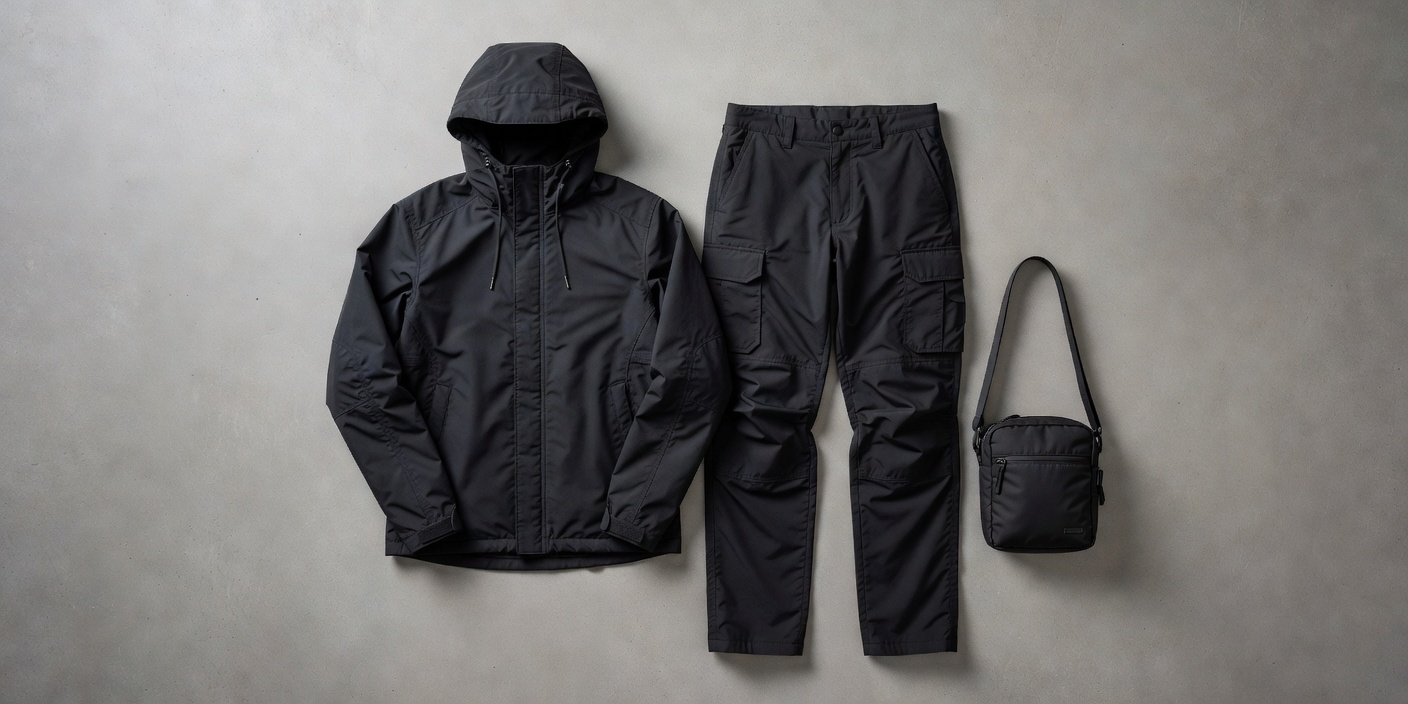
Keep the overlapping wardrobes distinct
Cyberpunk style draws from industrial workwear, punk, military surplus, club clothing and speculative costume. Techwear overlaps with that vocabulary but centres technical materials and functional construction; it is not simply an all-black outfit with cargo pockets. Likewise, a dramatic cyberpunk look does not need to claim outdoor performance to be successful.
This distinction helps avoid buying the wrong thing for the right image. Decide whether the priority is weather protection, movement, a specific silhouette or visual impact under artificial light. An item may serve several of those goals, but its appearance cannot establish the others. Treat styling photographs as proportion references, not evidence of waterproofness.
Build the outline before adding hardware
The relationship between volumes carries much of the look. A shorter, structured jacket can emphasise fuller trousers; a long outer layer can turn a narrow base into a continuous vertical line. Neither arrangement requires an elaborate accessory system. Begin with pieces that sit comfortably when standing, sitting and reaching.
Articulated knees, gussets and shaped sleeves can support movement, but their usefulness depends on cut and fit. Try the outfit with the layers and bag you intend to wear. A sleeve that looks clean in isolation may bind under a shell, while an oversized pocket can distort the trouser leg once it holds something heavier than air.
Read the shell, not the marketing mood
Water resistance, waterproof construction and breathability are different properties. A surface treatment can encourage water to bead without making the whole garment waterproof. Seams, closures, wear and the underlying fabric all matter. Breathability does not mean that exertion inside a closed shell will feel like wearing an open shirt.
Look for an explanation of the material and construction, then read the maker’s care instructions. Do not compare unexplained performance figures as though every test method were identical. For everyday urban use, ventilation, comfort and easy maintenance may matter more than a dramatic specification. A simpler garment can be the better fit if its compromises match your routine.
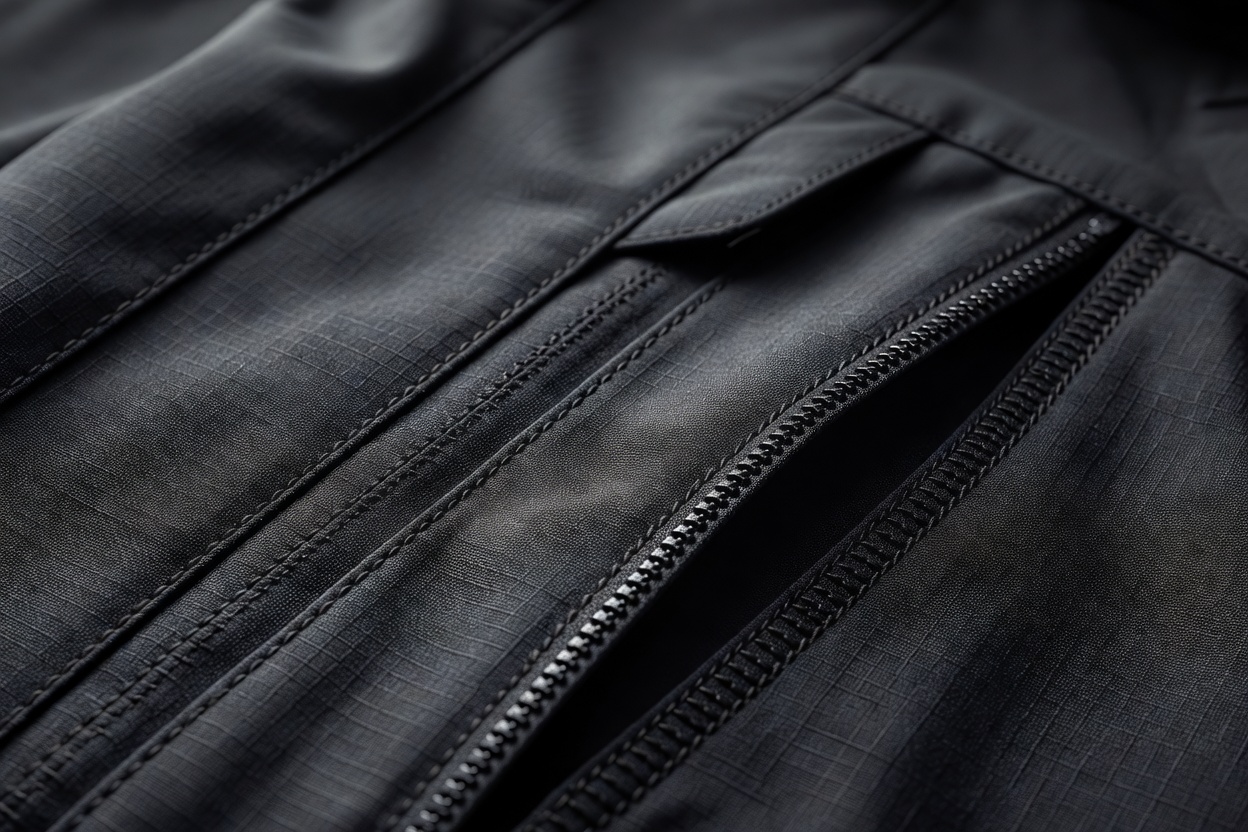
Pockets should work with the body and the bag
Assess access while wearing the complete outfit. A chest pocket can disappear under a cross-body strap; a hip pocket can become awkward beneath a long shell. Closure type matters too: an exposed opening behaves differently from a zip or covered flap when you sit, bend or move through a crowd.
Distribute what you carry rather than filling every available compartment. Dense objects can make trousers swing or pull, and straps that look controlled in a still image may snag during ordinary movement. Decorative hardware is a legitimate aesthetic choice, but keep it clear of machinery, bicycle components and other places where loose material creates a practical hazard.
Use contrast instead of compulsory black
Black makes texture important: matte cotton, coated fabric, mesh and reflective details can separate shapes without changing the palette. Charcoal, off-white and muted industrial colours also work, particularly when they clarify the layers. A cyan or magenta accent is optional, not a genre membership requirement.
Reflective trim responds to directed light; it is not the same thing as an active light source or certified visibility equipment. Footwear should earn its place through fit, grip appropriate to the setting and compatibility with the trouser shape. A heavy-looking sole does not establish durability, and a futuristic profile says little about comfort over an ordinary day.
Let maintenance become part of the look
Check whether fastenings are accessible, whether a worn component can be repaired and whether the care routine is realistic for you. Bonded construction and specialised coatings can require different treatment from conventional woven workwear. Follow the garment label rather than applying a generic wash or reproofing routine to every black jacket.
Second-hand pieces, visible repairs and altered proportions can bring the genre’s interest in adaptation into the wardrobe without imitating a particular screen costume. Start with what already fits, identify the missing function, and add deliberately. The result can still be theatrical. It simply does not need to confuse theatre with a technical guarantee.